


More traffic doesn't always mean more conversions. Here's what to check before the biggest promotional weeks of November.
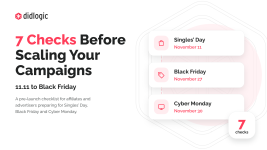
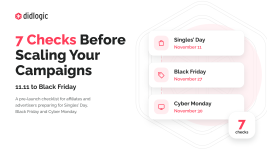
November is almost here, and so are some of the busiest promotional dates of the year:
Some iGaming and betting operators also use the November promotional period for seasonal campaigns, although the opportunities depend heavily on the GEO, local regulations, and the operator's own marketing calendar. More promotions usually mean more competition for attention. But there's something worth remembering before increasing your campaign budgets:
A great offer and a successful ad campaign don't guarantee a completed conversion.
The customer still needs to complete the journey after clicking. That might mean finishing checkout, receiving a verification code, completing registration, or speaking to a call center agent. And when campaign volumes increase, problems in those steps can become much more noticeable.
According to Partnerize's analysis of the 2025 peak retail season, mobile accounted for 61% of revenue on Singles' Day among its measured retail clients, while conversions declined despite higher spending.
It's a useful reminder: more shopping activity doesn't automatically translate into better conversion rates. So, before you scale your next seasonal campaign, here are seven things worth checking.
Before launching, check:
From the affiliate's side, the campaign may appear to have a traffic-quality problem. From the operator's side, the issue might be somewhere in the registration or messaging process. The important point is that both teams may be looking at different parts of the same funnel.
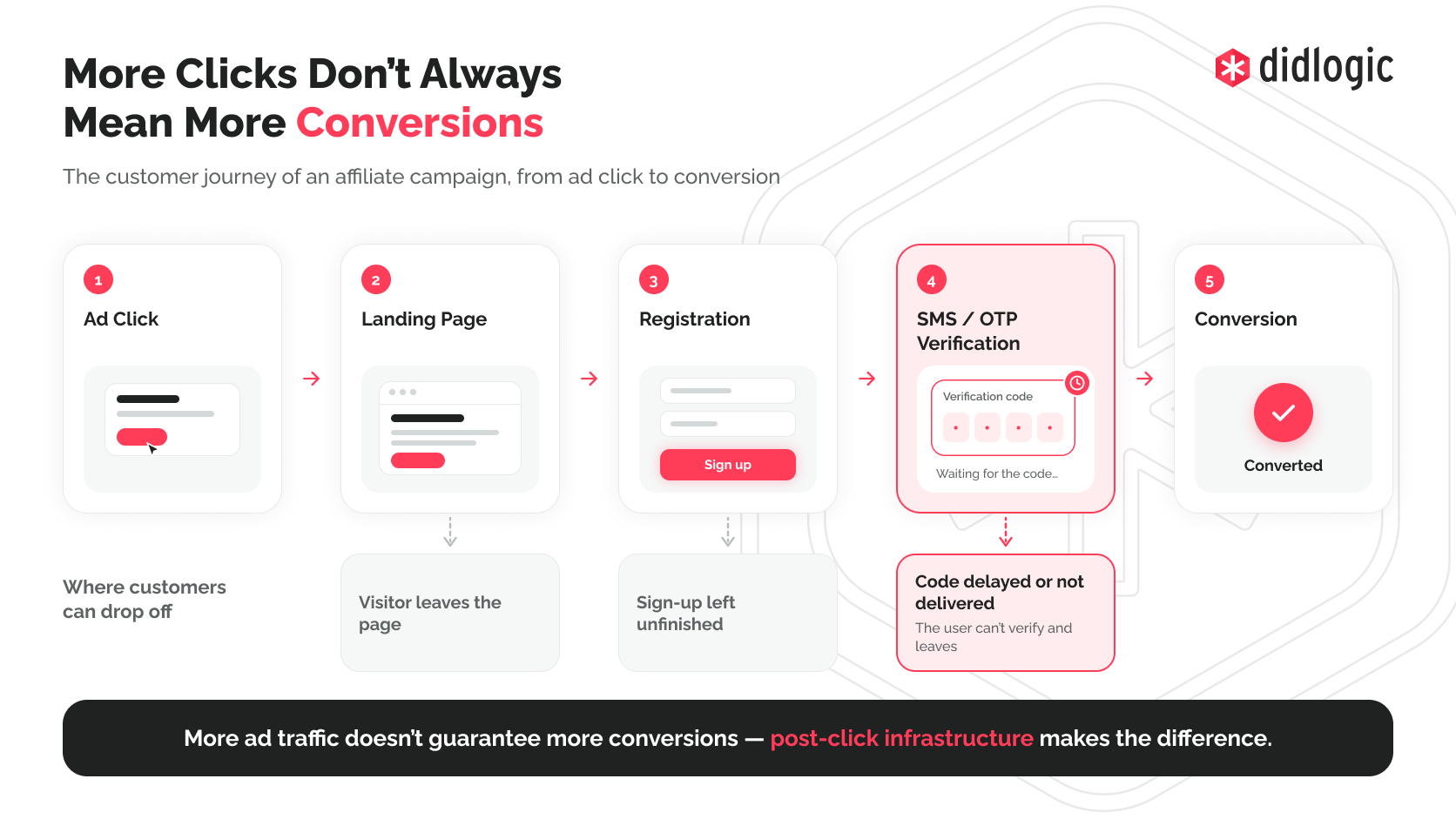
Before scaling, test the complete journey where you have permission to do so:
Ad → Landing page → Registration → Verification → Required action → Conversion
A campaign might use messaging for:
Before a major campaign, advertisers should check whether their messaging setup can support the expected traffic and whether critical messages can be monitored separately from promotional activity.
Useful questions include:
For gambling and betting, the situation can be even more restrictive. For example, the UK's Gambling Commission requires covered remote gambling operators to respect customer marketing preferences by both product and communication channel, including SMS.
In the United States and Canada, some major carrier messaging programs prohibit gambling-related SMS traffic entirely, even where the underlying gambling activity may be legal. That means a licensed operator should not assume it can run the same SMS campaign globally.
Before sending promotional messages, check:
It's also worth checking how localized SMS content behaves. A short English message and its translated version may not use the same number of SMS segments. Non-Latin characters and certain symbols can change the encoding, potentially increasing the number of billable segments. For businesses sending large volumes, that can affect campaign costs. And for recipients, message clarity matters just as much as timing.
Before launch:
Consider a hypothetical 11.11 campaign generating significantly more leads than usual. The advertising side is working perfectly. But the call center has the same number of operators as on a normal day.
What happens to the extra leads?
Some may wait longer for their first call. Some may require additional attempts. Others may become unreachable before an agent gets to them. This isn't necessarily a problem with the original traffic. It's an operational bottleneck between lead generation and confirmation. Before scaling a call-based campaign, advertisers should review:
🛍For e-commerce:
 For Nutra/COD:
 For iGaming:
The better your reporting, the easier it becomes to decide whether to scale, optimize, or investigate.
If you're an affiliate preparing for 11.11 or Black Friday, you probably don't control your advertiser's SMS provider, verification system, or call center. That's fine. You don't need to manage their infrastructure yourself.
But you can ask a few useful questions:
For seasonal campaigns, this can include A2P messaging for OTPs and customer notifications, supported promotional SMS, and voice connectivity for call centers handling incoming leads.
For outbound A2P messaging, a virtual phone number isn't always necessary. Depending on the destination, businesses may be able to use an approved business sender ID.
If two-way conversations are needed, an eligible SMS-enabled phone number may be more appropriate. The available setup depends on the country, traffic type, sender requirements, and applicable restrictions.
You can find more details here:
If your team is preparing a multi-GEO campaign and wants to check available messaging or voice options, the most useful starting information is the destination countries, message type, expected traffic volume, and use case.
But scaling shouldn't mean looking only at the advertising side. The complete conversion journey matters -- from the first click to the final validated action. Sometimes the biggest improvement isn't a new creative, a higher payout, or a bigger budget. It's making sure the customer can actually complete the journey after clicking.
Curious how others are preparing for November campaigns:
When you're scaling an offer during a major promotion, what's the first thing you check -- traffic quality, registration and OTP performance, advertiser approval rates, or something else?
Would be interesting to hear how different verticals handle peak campaign periods.
November is almost here, and so are some of the busiest promotional dates of the year:
- November 11 — Singles' Day (11.11)
- November 27 — Black Friday
- November 30 — Cyber Monday
Some iGaming and betting operators also use the November promotional period for seasonal campaigns, although the opportunities depend heavily on the GEO, local regulations, and the operator's own marketing calendar. More promotions usually mean more competition for attention. But there's something worth remembering before increasing your campaign budgets:
A great offer and a successful ad campaign don't guarantee a completed conversion.
The customer still needs to complete the journey after clicking. That might mean finishing checkout, receiving a verification code, completing registration, or speaking to a call center agent. And when campaign volumes increase, problems in those steps can become much more noticeable.
According to Partnerize's analysis of the 2025 peak retail season, mobile accounted for 61% of revenue on Singles' Day among its measured retail clients, while conversions declined despite higher spending.
It's a useful reminder: more shopping activity doesn't automatically translate into better conversion rates. So, before you scale your next seasonal campaign, here are seven things worth checking.
1. Make sure the offer actually fits the GEO
11.11, Black Friday, and Cyber Monday aren't equally important in every market. An e-commerce campaign targeting Southeast Asia might perform differently from a retail offer targeting Western Europe or North America. And a seasonal promotion that makes sense for a fashion retailer won't necessarily resonate with an iGaming audience.Before launching, check:
- Is this promotional event relevant to the target GEO?
- Are the offer terms and promotional dates confirmed?
- Does the landing page match the promotion shown in the ad?
- Are the commission rules and attribution windows clear?
- Is the advertiser prepared to handle the expected demand?
2. Test the entire journey, not just the landing page
Imagine you're running a Black Friday campaign. Your ad gets clicks. The landing page loads quickly. Visitors start registering. Everything looks good. But after entering their phone numbers, some users never finish verification. Or the OTP arrives too late, and they've already closed the page.From the affiliate's side, the campaign may appear to have a traffic-quality problem. From the operator's side, the issue might be somewhere in the registration or messaging process. The important point is that both teams may be looking at different parts of the same funnel.
Before scaling, test the complete journey where you have permission to do so:
Ad → Landing page → Registration → Verification → Required action → Conversion
- For e-commerce, that final action might be a completed purchase.
- For Nutra/COD, it could be a lead that is successfully confirmed.
- For iGaming, it may be a verified registration or qualifying first deposit, depending on the offer's conversion rules.
3. Check what happens to SMS when traffic increases
SMS often sits in the middle of important conversion steps.A campaign might use messaging for:
- Account verification and OTPs
- Order confirmations
- Delivery notifications
- Customer-service updates
- Promotional offers, where permitted
Before a major campaign, advertisers should check whether their messaging setup can support the expected traffic and whether critical messages can be monitored separately from promotional activity.
Useful questions include:
- Are OTPs being delivered within the required time window?
- Are delivery reports available for the relevant destinations?
- Can the team identify failed or delayed messages?
- Are sender IDs configured and approved where necessary?
- Has the messaging setup been tested in each target country?
4. Don't assume promotional SMS is allowed everywhere
This is especially important for international campaigns. A promotional SMS that is permitted in one country might face different restrictions in another. Requirements can depend on the destination, sender identity, message content, consent, and local carrier policies.For gambling and betting, the situation can be even more restrictive. For example, the UK's Gambling Commission requires covered remote gambling operators to respect customer marketing preferences by both product and communication channel, including SMS.
In the United States and Canada, some major carrier messaging programs prohibit gambling-related SMS traffic entirely, even where the underlying gambling activity may be legal. That means a licensed operator should not assume it can run the same SMS campaign globally.
Before sending promotional messages, check:
- Whether the campaign content is allowed
- Whether recipients have provided the required consent
- Whether age restrictions and suppression requirements are satisfied
- Whether the sender and route support this specific traffic
- Whether customers can opt out as required
5. Think about timing, localization, and message length
Black Friday might be one date on the calendar, but your audience isn't necessarily operating in one time zone. An international campaign can involve customers in several countries, each with different local hours, languages, and communication preferences. A message sent at the right time for one market could arrive at an inappropriate hour in another. This becomes particularly relevant for flash offers that expire within a short period.It's also worth checking how localized SMS content behaves. A short English message and its translated version may not use the same number of SMS segments. Non-Latin characters and certain symbols can change the encoding, potentially increasing the number of billable segments. For businesses sending large volumes, that can affect campaign costs. And for recipients, message clarity matters just as much as timing.
Before launch:
- Review the message in the recipient's language.
- Confirm the offer terms and expiry time.
- Test the sender identity.
- Check the number of SMS segments.
- Schedule messages according to the relevant local rules and customer preferences.
6. If the conversion requires a phone call, check your call center capacity
Not every affiliate conversion happens online. For Nutra/COD, financial services, home services, and other phone-qualified offers, a submitted lead may still need to be contacted by an agent.Consider a hypothetical 11.11 campaign generating significantly more leads than usual. The advertising side is working perfectly. But the call center has the same number of operators as on a normal day.
What happens to the extra leads?
Some may wait longer for their first call. Some may require additional attempts. Others may become unreachable before an agent gets to them. This isn't necessarily a problem with the original traffic. It's an operational bottleneck between lead generation and confirmation. Before scaling a call-based campaign, advertisers should review:
- Expected lead volume by hour and GEO
- Available agent capacity
- Time to first call
- Contact and answer rates
- Local calling windows
- Outbound routing and number availability
7. Agree on what success looks like before increasing the budget
This may be the most important check of all. During a major promotional period, it can be tempting to make decisions based only on clicks, registrations, or the first numbers appearing in the affiliate dashboard. But different verticals require different metrics.🛍For e-commerce:
- Completed purchases
- Conversion rate
- Average order value
- Cancellations and returns
- Approved commissions
For Nutra/COD:- Valid leads
- Contact rate
- Approval rate
- Confirmed orders
- Rejection reasons
For iGaming:- Completed registrations
- Successful verification
- Qualified first deposits
- Applicable player-quality metrics
- Confirmed affiliate commissions
The better your reporting, the easier it becomes to decide whether to scale, optimize, or investigate.
A quick checklist to discuss with your advertiser
But you can ask a few useful questions:
- Have you tested the full conversion flow in the GEO we're targeting?
- Are registration, verification, and payment systems prepared for the campaign volume?
- If leads need phone confirmation, can your call center handle the expected increase?
- Will we be able to distinguish traffic-quality issues from post-click conversion problems?
- Who should we contact if conversion rates suddenly drop during the promotion?
Where telecom infrastructure fits in
At didlogic, we work with businesses that rely on international voice, phone numbers, SIP trunking, and messaging infrastructure across different markets.For seasonal campaigns, this can include A2P messaging for OTPs and customer notifications, supported promotional SMS, and voice connectivity for call centers handling incoming leads.
For outbound A2P messaging, a virtual phone number isn't always necessary. Depending on the destination, businesses may be able to use an approved business sender ID.
If two-way conversations are needed, an eligible SMS-enabled phone number may be more appropriate. The available setup depends on the country, traffic type, sender requirements, and applicable restrictions.
You can find more details here:
If your team is preparing a multi-GEO campaign and wants to check available messaging or voice options, the most useful starting information is the destination countries, message type, expected traffic volume, and use case.
To sum-up;
11.11 and Black Friday are great reasons to review campaign opportunities, test new offers, and prepare for increased demand.But scaling shouldn't mean looking only at the advertising side. The complete conversion journey matters -- from the first click to the final validated action. Sometimes the biggest improvement isn't a new creative, a higher payout, or a bigger budget. It's making sure the customer can actually complete the journey after clicking.
Curious how others are preparing for November campaigns:
When you're scaling an offer during a major promotion, what's the first thing you check -- traffic quality, registration and OTP performance, advertiser approval rates, or something else?
Would be interesting to hear how different verticals handle peak campaign periods.