



Everyone knows that dating is an evergreen vertical that consistently delivers results. But focusing on just one niche may not be the most effective strategy. It always makes sense to have other sources of revenue and profitable verticals in your portfolio.
At Cpamatica, we increasingly see affiliates looking for opportunities beyond traditional dating — safer, fresher options that attract new users. And one niche that genuinely makes sense is comics. Don't be surprised: comics are no longer just illustrated stories. They are narrative-driven content that taps into the same triggers as dating. The difference? Traffic is cheaper, funnels are simpler, and user attention is not yet oversaturated.
My name is Yulia, and I'm an Affiliate Team Lead at Cpamatica. In this article, I'll explain why the comics niche is a good alternative to traditional dating.
Comics position themselves as erotic stories without being overly explicit. The format relies on atmosphere, suspense, and visual hooks. The content is easy to follow and draws users into the story.
Here's how it works:
If you're looking for a niche that combines emotions, visuals, and a proven funnel, comics are worth testing — especially now, while competition remains relatively low.
For affiliates, testing is straightforward: ready-made creatives, a clear funnel, and softer content with broad promotional potential across major traffic sources. This also makes it possible to test different approaches to audience acquisition.
These users actively engage with platforms where this type of content is not just allowed but appreciated. These include:
This isn't a cold user coming from a random teaser. It's someone actively looking for this type of content. That's precisely why they convert well.
Here are the traffic sources worth testing:
As for GEOs, comics tend to perform best in markets with an established culture of storytelling and visual content. Here are the first GEOs I'd recommend testing:
Here's what's available:
This niche doesn't tie you to a single approach. On the contrary, it gives you room to test and scale according to your own strategy.
A typical funnel looks like this:
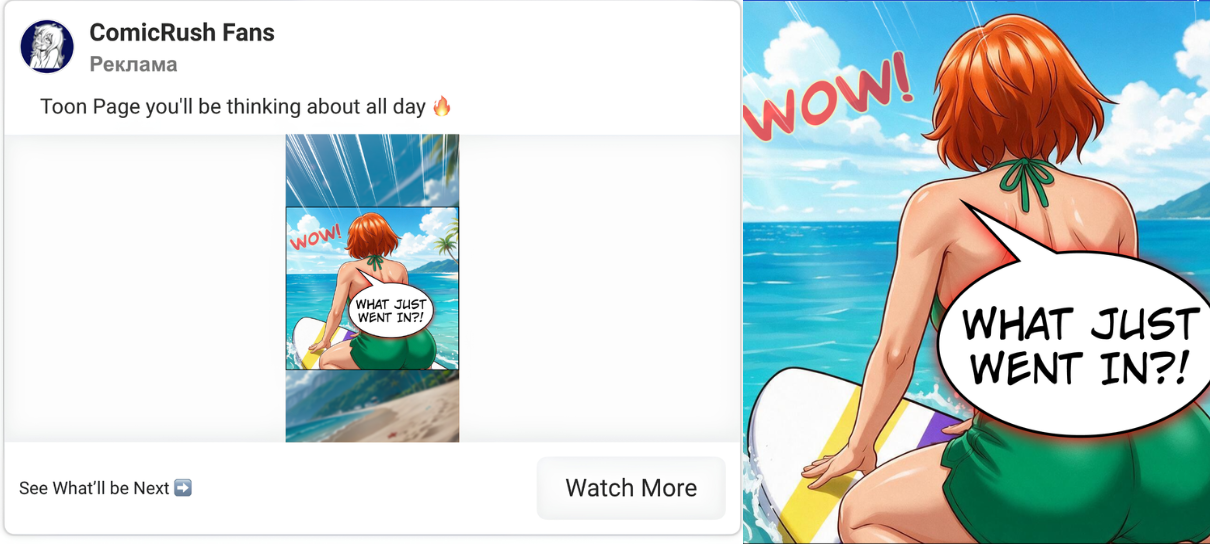
In this funnel, users aren't sent through pre-landers or separate pages. Instead, they are immersed in the story immediately. This shortens the user journey and reduces traffic loss at every step.
Here's how the funnel works:
At Cpamatica, we already have a selection of offers ready for testing, including ComicRush, Honeytoon, Peachytoon, and Toonhub, along with a wide range of creatives and landing pages and regular content updates.
For affiliates, this is an opportunity to enter a vertical with less competition, a familiar conversion model, and strong potential. Build the story effectively, and users will be motivated to pay for the content themselves.
As an affiliate manager, I see that affiliates are still approaching this niche cautiously — and that's precisely where its strength lies. There's room to experiment, get creative, and launch campaigns beyond the usual approaches. This isn't a short-lived hype trend that rises and falls. It's a format built on genuine interest rather than promises.
At Cpamatica, we increasingly see affiliates looking for opportunities beyond traditional dating — safer, fresher options that attract new users. And one niche that genuinely makes sense is comics. Don't be surprised: comics are no longer just illustrated stories. They are narrative-driven content that taps into the same triggers as dating. The difference? Traffic is cheaper, funnels are simpler, and user attention is not yet oversaturated.
My name is Yulia, and I'm an Affiliate Team Lead at Cpamatica. In this article, I'll explain why the comics niche is a good alternative to traditional dating.
The comics as a niche in affiliate marketing
Comics are no longer just entertainment for fans of visual content. They are a viable product with a clear conversion funnel that drives emotions, engagement, and consistent conversions. I see this niche as a strong alternative to traditional verticals, especially if you have experience in dating and are ready to scale.Comics position themselves as erotic stories without being overly explicit. The format relies on atmosphere, suspense, and visual hooks. The content is easy to follow and draws users into the story.
Here's how it works:
- Users read the story in episodes, with the first three available for free.
- Each episode ends with a hook that keeps the suspense going.
- To access the next part of the comic, users need to make a payment.
Why is this niche interesting for affiliates?
- It leverages the same triggers as dating: emotions, fantasies, and curiosity.
- A softer content format means fewer moderation issues.
- Content is updated regularly, creating more testing opportunities and reducing creative fatigue.
- Competition is significantly lower than in mainstream dating.
If you're looking for a niche that combines emotions, visuals, and a proven funnel, comics are worth testing — especially now, while competition remains relatively low.
Comics convert better than you think
When driving traffic to comic platforms, the key is not to dismiss them as something "childish" or purely entertaining. Comics are a serious marketing opportunity with several significant advantages.Low barrier to entry
This applies to both users and affiliates. For users, the barrier to entry is low because there's no complicated decision to make — they simply start reading. There's no commitment upfront, and the content creates an immediate emotional response.For affiliates, testing is straightforward: ready-made creatives, a clear funnel, and softer content with broad promotional potential across major traffic sources. This also makes it possible to test different approaches to audience acquisition.
High engagement
Comics are all about storytelling. Characters have their own stories, personalities, and conflicts. The plot develops, episodes continue, and users want to know what happens next. This encourages them to return to the product again and again.Strong emotional appeal
Comics tap into fantasies, fetishes, and fantasy scenarios. However, they present them through visuals, dialogue, and suspense rather than being overly direct. This format is less likely to raise moderation concerns while remaining highly effective at driving engagement.Audience profile and user habits
The primary audience for comic offers consists of men aged 18–40. They are familiar with anime, manga, and storytelling, and often actively consume visual content featuring fantasy, adventure, or romance. In most cases, these are not internet beginners. They understand subcultures and have a consistent interest in specific genres.These users actively engage with platforms where this type of content is not just allowed but appreciated. These include:
- Reddit — especially subreddits dedicated to manga, anime, and erotic romance.
- Manga and comic forums — often private or niche communities with loyal audiences.
- Scanlation websites — where fans publish translated or original stories.
- Telegram and Discord communities — provided you find relevant niche groups.
This isn't a cold user coming from a random teaser. It's someone actively looking for this type of content. That's precisely why they convert well.
Traffic sources for comic offers
In this niche, traffic sources work best when users are already accustomed to engaging with visual content. Campaigns are more likely to deliver results when creatives focus on the story rather than simply showing images.Here are the traffic sources worth testing:
- SEO websites. Organic traffic from searches such as "read manga online" and "fantasy comics."
- Push and pop traffic. These formats can work particularly well when you whitelist relevant niche websites or categories featuring anime and comic content, such as hentai, manga, and cartoons on suitable ad networks.
- In-app advertising. Particularly in apps for reading stories, novels, or manga.
- PWA funnels. Especially effective when the pre-landing page builds a compelling scene.
- Facebook Ads. Technically possible, but this approach requires testing a significant number of creatives and angles.
- manhuaus.com
- ravenscans.com
- toongod.org
- mangago.me
Popular manga websites
These platforms can help you identify trending storylines and, in some cases, purchase ad placements directly. Even if you don't plan to buy traffic from them, they are valuable sources of insights for creating pre-landers and ad creatives. See what people are reading, then adapt the storyline to your campaign.As for GEOs, comics tend to perform best in markets with an established culture of storytelling and visual content. Here are the first GEOs I'd recommend testing:
- United States — the largest audience and high purchasing power.
- United Kingdom, Canada, Australia, and New Zealand — established English-speaking audiences with solid CPM potential.
- France — a market worth considering separately, where storytelling works well, particularly with adapted creatives and localized content.
Tools for affiliates
Another advantage of this niche is how easy it is to launch campaigns. At Cpamatica, you'll find everything you need to get started: ready-made creatives, tested landing pages, and tools you can adapt to your strategy.Here's what's available:
- Ready-made creatives: visuals featuring actual comic characters that can be adapted to different promotional angles.
- Flexible funnels: the ability to tailor the funnel to fantasy, romance, drama, or something bolder.
- Frequent content updates: new stories are added regularly, helping keep audiences engaged.
- A wide variety of hooks: fantasy, intimacy, suspense, action, and plot twists.
This niche doesn't tie you to a single approach. On the contrary, it gives you room to test and scale according to your own strategy.
How the funnel works: hook, suspense, subscription
In comics, the conversion funnel is built directly into the storyline. The main tool is the hook — a moment of tension or an unanswered question that encourages users to keep reading.A typical funnel looks like this:
- Creative: an intriguing frame, action, or line of dialogue that sparks surprise or curiosity.
- Landing page: the first free episode, starting at a point where the story is already underway.
- Engagement: three free episodes before the paywall.
- Paywall: users need to subscribe to find out what happens next.
Ad Creative: "Toon Page You'll Be Thinking About All Day!"
The creative features a shocked female character, with the scene taken from the middle of an unfolding event. The call to action is "Read comic." The ad takes users directly to the first free episode, which serves as the landing page.In this funnel, users aren't sent through pre-landers or separate pages. Instead, they are immersed in the story immediately. This shortens the user journey and reduces traffic loss at every step.
What to use in your campaign
- Creatives: scenes with unfinished action or dramatic moments.
- Funnel: as few steps as possible — teaser → story → subscription.
- Content structure: several free episodes leading to a strong hook.
ComicRush: what a working funnel looks like in the comics niche
ComicRush is one example that puts everything described above into practice. It is a platform exclusively available through Cpamatica, featuring illustrated stories built around suspense, visuals, romance, and subtle hooks. Its monetization model is subscription-based.Here's how the funnel works:
- The user sees a story teaser.
- They enter the story and read several free chapters.
- At a certain point, a paywall appears. To access the rest of the story, they need to subscribe.
Why is this convenient for affiliates?
- A predictable conversion point: it always occurs at the same stage of the funnel.
- Ready-made visuals and flexible storylines: no need to create everything from scratch.
- Regular story updates: plenty of content to test and keep users interested.
Storytelling that converts
While everyone else is running dating campaigns and fighting for every click in an overheated auction, comics remain under the radar for most affiliates.At Cpamatica, we already have a selection of offers ready for testing, including ComicRush, Honeytoon, Peachytoon, and Toonhub, along with a wide range of creatives and landing pages and regular content updates.
For affiliates, this is an opportunity to enter a vertical with less competition, a familiar conversion model, and strong potential. Build the story effectively, and users will be motivated to pay for the content themselves.
As an affiliate manager, I see that affiliates are still approaching this niche cautiously — and that's precisely where its strength lies. There's room to experiment, get creative, and launch campaigns beyond the usual approaches. This isn't a short-lived hype trend that rises and falls. It's a format built on genuine interest rather than promises.