



When you run COD or Nutra campaigns, generating the lead is only half of the job. A customer can click the ad, submit the form and enter the CRM — but someone still has to reach them and confirm the order.
In practice, there is another conversion funnel after the landing page:
Lead → Call → Answer → Agent → Confirmed Order
If confirmations start dropping, the traffic source isn't necessarily the problem. The issue may be happening further down the funnel: slow lead handling, low answer rates, poor routing, caller ID problems or simply a call center struggling with higher volume.
The phone number is part of the funnel
Before a customer hears the agent, they see a caller ID. Depending on the GEO, a campaign may use:
But once a campaign expands across several GEOs, number strategy stops being just a technical detail. A setup that works in Italy may not be the right setup for Spain, Poland or Romania.
High-volume teams also often use pools of caller IDs instead of sending every call through one number. The goal is not random rotation, but distributing volume, keeping numbers available for callbacks and monitoring how different numbers perform.
Cheap routing can become expensive
After the dialer places the call, the telecom provider still has to deliver it to the customer's network.
Two routes to the same GEO can look similar on a rate sheet and behave very differently with real traffic. That's why call centers often monitor:
A missed call doesn't have to mean a lost lead
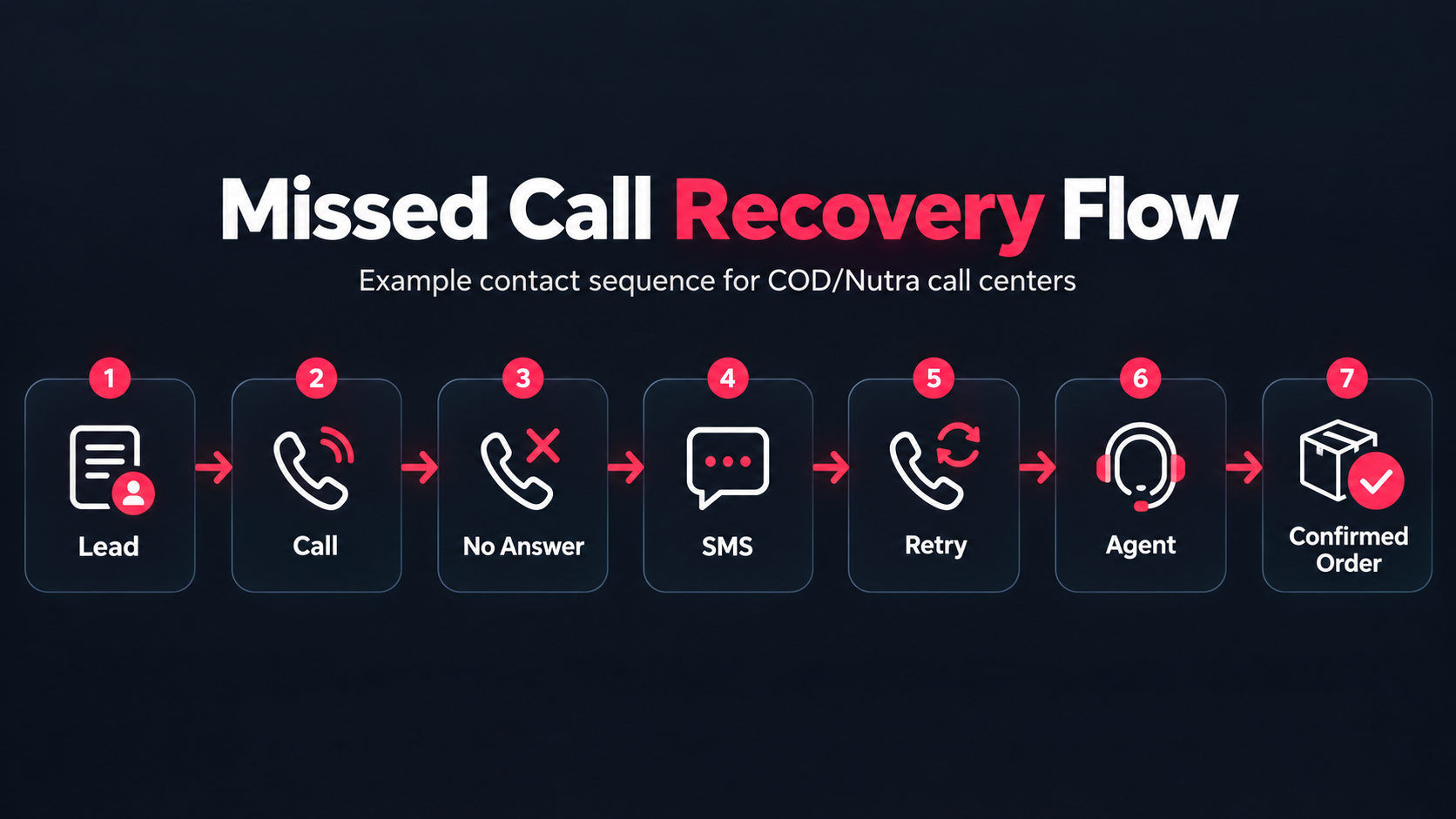
A common retry flow is simple:
First call → no answer → second call → third call
But another option is to combine voice with messaging:
Call → no answer → SMS → callback or another call
For example, an SMS can explain that the missed call was related to an order the customer recently placed. The next call then arrives with some context instead of looking completely random.
The exact workflow depends on the GEO, consent requirements and local regulations, but the idea is useful: voice and SMS can work as one contact flow instead of two separate channels.
Multi-GEO campaigns expose the weak points
COD and Nutra campaigns often scale country by country. Every new market adds another set of variables: numbers, routes, caller IDs, operating hours and messaging rules.
Before blaming the traffic when performance drops, it is worth checking:
The takeaway
Affiliates don't need to become telecom engineers. But if your revenue depends on a call center converting leads, it helps to understand what happens after the lead leaves the landing page.
At didlogic, we work on this infrastructure layer: phone numbers, outbound voice, SIP trunking, caller ID management and SMS for businesses operating across multiple GEOs.
For those running COD or Nutra campaigns: where do you normally see the biggest drop-off — generating the lead, reaching the lead, or confirming the order?
In practice, there is another conversion funnel after the landing page:
Lead → Call → Answer → Agent → Confirmed Order
If confirmations start dropping, the traffic source isn't necessarily the problem. The issue may be happening further down the funnel: slow lead handling, low answer rates, poor routing, caller ID problems or simply a call center struggling with higher volume.
The phone number is part of the funnel
Before a customer hears the agent, they see a caller ID. Depending on the GEO, a campaign may use:
- local geographic numbers
- mobile numbers
- national numbers
- toll-free numbers
But once a campaign expands across several GEOs, number strategy stops being just a technical detail. A setup that works in Italy may not be the right setup for Spain, Poland or Romania.
High-volume teams also often use pools of caller IDs instead of sending every call through one number. The goal is not random rotation, but distributing volume, keeping numbers available for callbacks and monitoring how different numbers perform.
Cheap routing can become expensive
After the dialer places the call, the telecom provider still has to deliver it to the customer's network.
Two routes to the same GEO can look similar on a rate sheet and behave very differently with real traffic. That's why call centers often monitor:
- ASR — how many call attempts are answered
- ACD — how long answered calls last
- PDD — how quickly the call starts ringing or connects
A missed call doesn't have to mean a lost lead
A common retry flow is simple:
First call → no answer → second call → third call
But another option is to combine voice with messaging:
Call → no answer → SMS → callback or another call
For example, an SMS can explain that the missed call was related to an order the customer recently placed. The next call then arrives with some context instead of looking completely random.
The exact workflow depends on the GEO, consent requirements and local regulations, but the idea is useful: voice and SMS can work as one contact flow instead of two separate channels.
Multi-GEO campaigns expose the weak points
COD and Nutra campaigns often scale country by country. Every new market adds another set of variables: numbers, routes, caller IDs, operating hours and messaging rules.
Before blaming the traffic when performance drops, it is worth checking:
- How quickly is the first call made after the lead arrives?
- Did the answer rate change?
- Is the problem limited to one GEO?
- Did the route or caller ID pool change?
- How are retries handled?
- What happens to missed calls?
- Does performance drop during peak volume?
The takeaway
Affiliates don't need to become telecom engineers. But if your revenue depends on a call center converting leads, it helps to understand what happens after the lead leaves the landing page.
At didlogic, we work on this infrastructure layer: phone numbers, outbound voice, SIP trunking, caller ID management and SMS for businesses operating across multiple GEOs.
For those running COD or Nutra campaigns: where do you normally see the biggest drop-off — generating the lead, reaching the lead, or confirming the order?