


For an iGaming operator expanding into new markets, SMS can look deceptively simple.
A player enters a phone number. A message is sent. The player receives it.
In practice, the messaging layer gets more complicated as soon as you start operating across multiple GEOs.
An OTP sent during registration, a withdrawal notification and a promotional campaign may all use SMS, but they are not the same type of traffic. They can have different requirements, sender options, delivery expectations and compliance considerations.
Treating them as one generic “SMS channel” can create problems exactly where iGaming businesses cannot afford them: registration, verification, payments and retention.
Here are the main differences teams should account for.
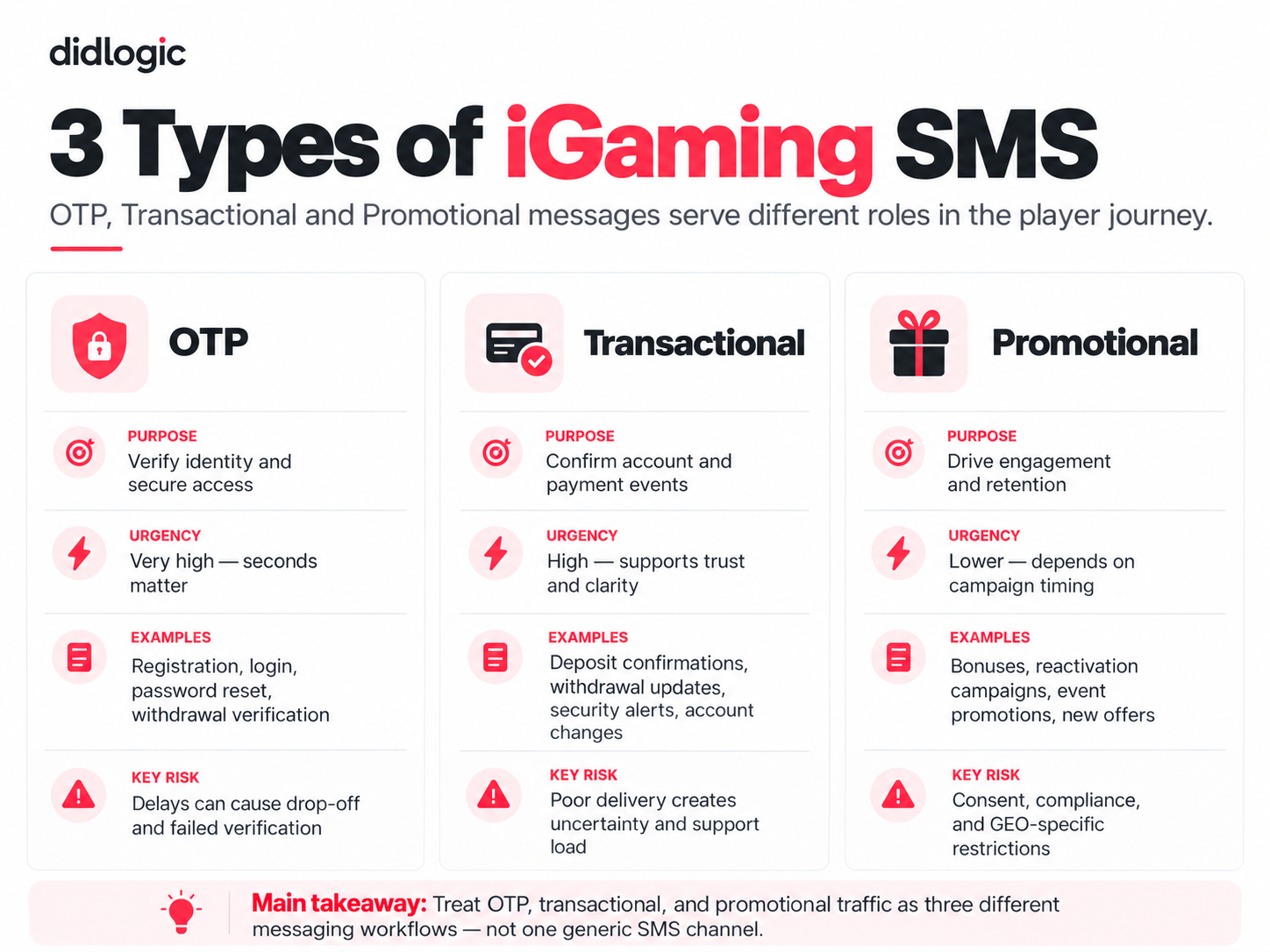
It can appear during:
If it takes too long, the problem is not simply “one SMS was delayed.” The user may abandon the registration or verification flow entirely.
For OTP traffic, the key questions are therefore operational:
Local regulations, mobile networks, sender requirements and available routes can differ significantly between markets.
It can include:
That makes reliability and clarity important.
Imagine a player completes a withdrawal request and receives no confirmation. Even if the transaction is technically processing correctly, the missing communication creates uncertainty.
The telecom layer therefore becomes part of the customer experience.
For multi-GEO operators, another question appears:
Should every market use exactly the same messaging setup?
Often, the answer is no.
Sender type, sender registration and message restrictions can vary from one destination to another. A setup designed for one region may need to be adjusted before being deployed elsewhere.
It may include:
This is one of the areas where teams need to be especially careful.
A campaign that is technically possible to send does not automatically mean it should be sent in the same way across every GEO.
Before launching promotional SMS into a new market, teams should verify:
These hurdles have also come up in the community, including an affLIFT discussion about SMS platforms and the practical challenges of US regulations.
In reality, different destinations may support different sender types.
Depending on the market, that could include:
This matters for iGaming because sender identity affects both operational reliability and user recognition.
A player receiving an OTP from an unfamiliar or inconsistent sender may be less likely to trust the message.
So sender strategy should be considered as part of the market-launch process, not added at the end.
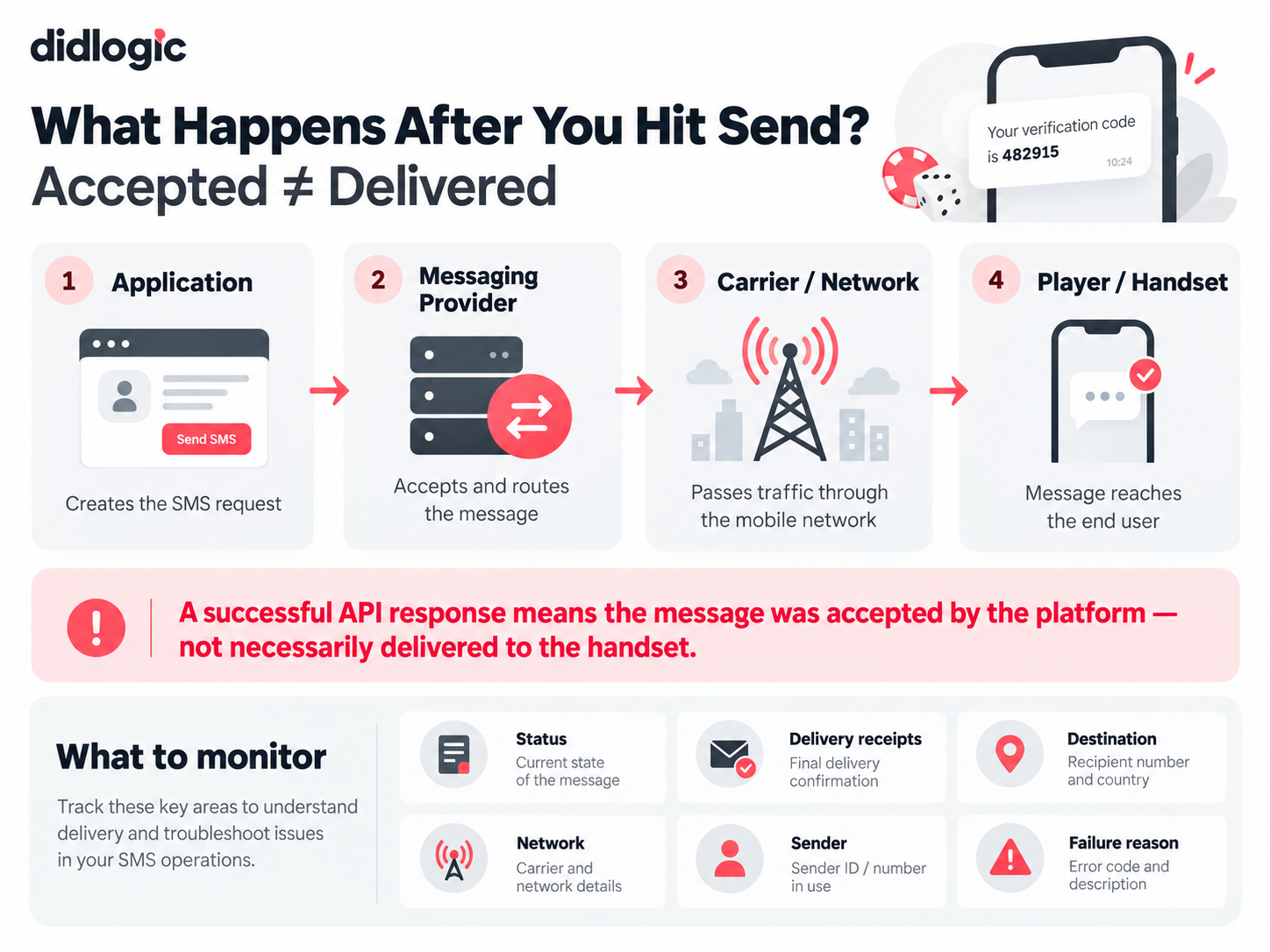
Another important distinction is between a message being accepted by the messaging platform and actually reaching the handset.
Between those two events, the message may pass through several systems:
application → messaging provider → carrier/network → subscriber
A successful API response only confirms one part of that chain.
If delivery rates fall, teams need enough visibility to understand where the issue is occurring.
Useful information includes:
An SMS is not always billed as one message simply because it appears as one message on the user's phone.
Long messages may be split into multiple SMS segments.
Using characters outside the standard GSM character set can also reduce the number of characters available per segment.
This means a seemingly small change in copy can increase the number of billable message segments.
At low volume this may not matter much.
At scale, especially across millions of OTP, transactional and retention messages, it can become material.
This is why SMS copy should sometimes be reviewed not only by marketing and product teams, but also from a telecom perspective.
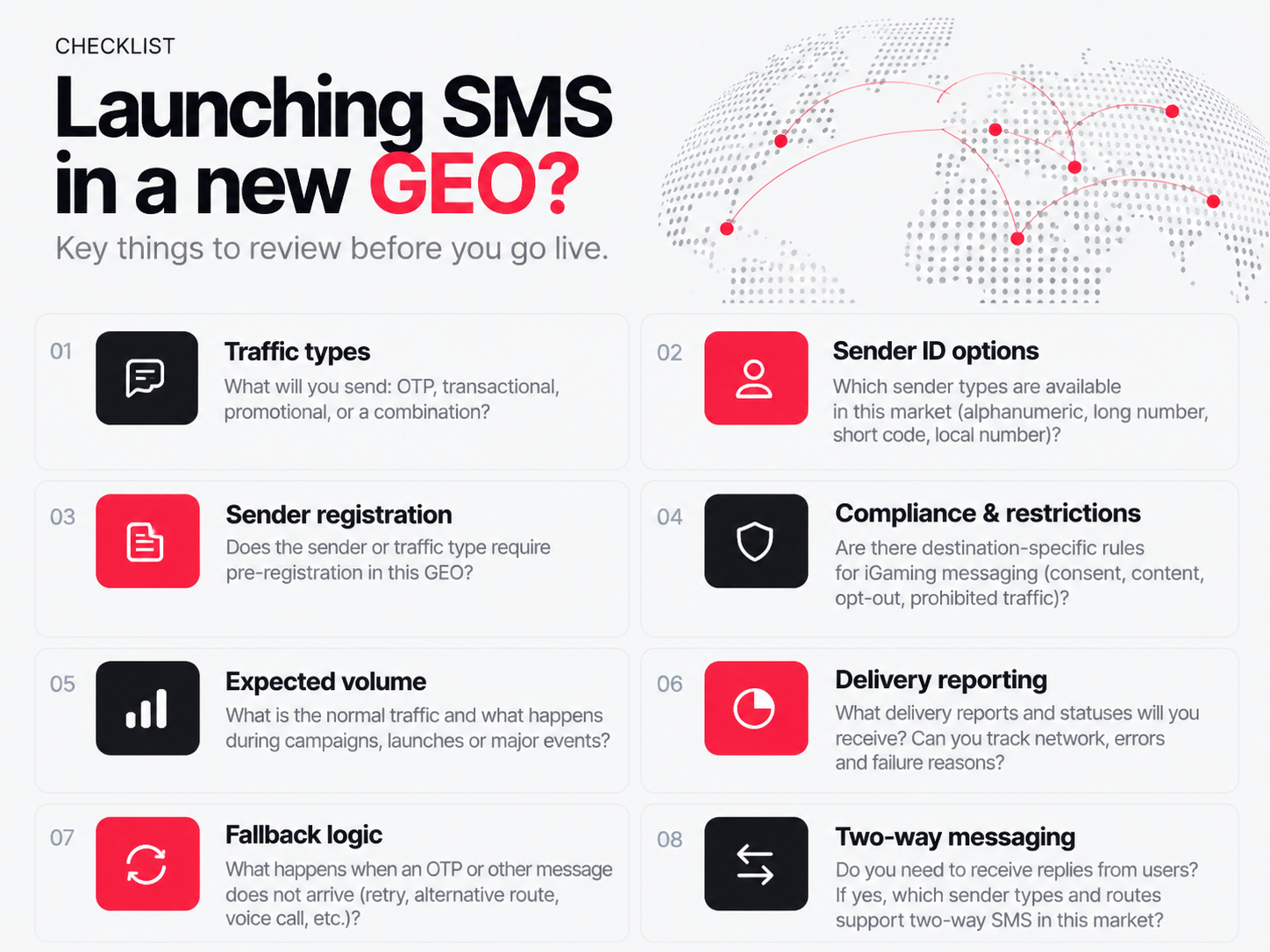
The exact requirements vary by destination, so the messaging setup should be reviewed market by market rather than copied from one GEO to another.
Depending on the operator, the same customer journey may also include:
That is why the telecom layer is worth thinking about as infrastructure rather than as a collection of isolated services.
“Do we need SMS?”
Most iGaming businesses already know that they do.
The better questions are:
Once those differences are reflected in the messaging architecture, it becomes much easier to design a setup that can scale across markets.
At didlogic, we work with voice, phone numbers and messaging infrastructure across multiple GEOs.
If you're preparing a new market and want to compare the available SMS, voice or number options, feel free to share the GEO and use case in our official affLIFT thread.
A player enters a phone number. A message is sent. The player receives it.
In practice, the messaging layer gets more complicated as soon as you start operating across multiple GEOs.
An OTP sent during registration, a withdrawal notification and a promotional campaign may all use SMS, but they are not the same type of traffic. They can have different requirements, sender options, delivery expectations and compliance considerations.
Treating them as one generic “SMS channel” can create problems exactly where iGaming businesses cannot afford them: registration, verification, payments and retention.
Here are the main differences teams should account for.
1. OTP SMS: speed and reliability come first
OTP is usually the most time-sensitive type of messaging in an iGaming flow.It can appear during:
- Account registration
- Phone-number verification
- Login
- Password reset
- Security checks
- Payment or withdrawal confirmation
If it takes too long, the problem is not simply “one SMS was delayed.” The user may abandon the registration or verification flow entirely.
For OTP traffic, the key questions are therefore operational:
- How quickly does the message reach the user?
- How consistent is delivery during traffic spikes?
- What happens if the first attempt fails?
- Does the setup work reliably across all target GEOs and operators?
Local regulations, mobile networks, sender requirements and available routes can differ significantly between markets.
2. Transactional SMS: part of the player experience
Transactional traffic is broader.It can include:
- Deposit confirmation
- Withdrawal updates
- Account changes
- Security alerts
- Customer-support notifications
- Verification updates
- Responsible account-management messages
That makes reliability and clarity important.
Imagine a player completes a withdrawal request and receives no confirmation. Even if the transaction is technically processing correctly, the missing communication creates uncertainty.
The telecom layer therefore becomes part of the customer experience.
For multi-GEO operators, another question appears:
Should every market use exactly the same messaging setup?
Often, the answer is no.
Sender type, sender registration and message restrictions can vary from one destination to another. A setup designed for one region may need to be adjusted before being deployed elsewhere.
3. Promotional SMS is a different category
Promotional messaging has a different purpose.It may include:
- Bonuses
- Promotions
- Reactivation campaigns
- Event notifications
- New product announcements
- Retention campaigns
This is one of the areas where teams need to be especially careful.
A campaign that is technically possible to send does not automatically mean it should be sent in the same way across every GEO.
Before launching promotional SMS into a new market, teams should verify:
- Whether the traffic type is permitted
- What consent requirements apply
- Whether sender registration is required
- What sender formats are supported
- Whether gambling-related promotional traffic has additional restrictions
- What opt-out requirements apply
These hurdles have also come up in the community, including an affLIFT discussion about SMS platforms and the practical challenges of US regulations.
4. Sender ID is not universal
One common mistake in international messaging is assuming that a sender configuration can simply be copied from one country to another.In reality, different destinations may support different sender types.
Depending on the market, that could include:
- Alphanumeric sender IDs
- Long numbers
- Short codes
- Local numbers
- Registered sender identities
This matters for iGaming because sender identity affects both operational reliability and user recognition.
A player receiving an OTP from an unfamiliar or inconsistent sender may be less likely to trust the message.
So sender strategy should be considered as part of the market-launch process, not added at the end.
5. “Accepted” does not always mean “delivered”
Another important distinction is between a message being accepted by the messaging platform and actually reaching the handset.
Between those two events, the message may pass through several systems:
application → messaging provider → carrier/network → subscriber
A successful API response only confirms one part of that chain.
If delivery rates fall, teams need enough visibility to understand where the issue is occurring.
Useful information includes:
- Message status
- Delivery receipts
- Destination
- Network
- Sender
- Traffic type
- Timestamps
- Failure reason where available
6. Message content can affect cost
There is also a less obvious issue: message length and encoding.An SMS is not always billed as one message simply because it appears as one message on the user's phone.
Long messages may be split into multiple SMS segments.
Using characters outside the standard GSM character set can also reduce the number of characters available per segment.
This means a seemingly small change in copy can increase the number of billable message segments.
At low volume this may not matter much.
At scale, especially across millions of OTP, transactional and retention messages, it can become material.
This is why SMS copy should sometimes be reviewed not only by marketing and product teams, but also from a telecom perspective.
7. New GEO = new messaging review
When an iGaming business launches a new GEO, teams usually review licensing, payments, localization, acquisition and support. Messaging infrastructure should be on that list too.The exact requirements vary by destination, so the messaging setup should be reviewed market by market rather than copied from one GEO to another.
8. Voice and SMS often belong to the same communication stack
Messaging rarely exists completely on its own.Depending on the operator, the same customer journey may also include:
- Customer-support calls
- Outbound calling
- Local phone numbers
- VIP account management
- Call-center operations
- Automated voice workflows
That is why the telecom layer is worth thinking about as infrastructure rather than as a collection of isolated services.
The main takeaway
The important question is not:“Do we need SMS?”
Most iGaming businesses already know that they do.
The better questions are:
- What type of SMS traffic are we sending?
- Into which GEOs?
- What role does each message play in the customer journey?
- What happens operationally if it is delayed or never delivered?
Once those differences are reflected in the messaging architecture, it becomes much easier to design a setup that can scale across markets.
At didlogic, we work with voice, phone numbers and messaging infrastructure across multiple GEOs.
If you're preparing a new market and want to compare the available SMS, voice or number options, feel free to share the GEO and use case in our official affLIFT thread.