



- Joined
- Jul 25, 2023
- Messages
- 437
(Note: To use the MobipiumOfferFinder tool you'll need know how to run a Jupyter Notebook .ipynb file. The tool consists of a single .ipynb file, found in MobipiumOfferFinder.zip, attached at the bottom of this post.)
Introduction
This is a tool for identifying high-converting Mobipium offers. But what is the underlying idea for how it works?
If you're familiar with Mobipium, then you're probably familiar with this "Last Conversion" statistic that appears on offer pages.
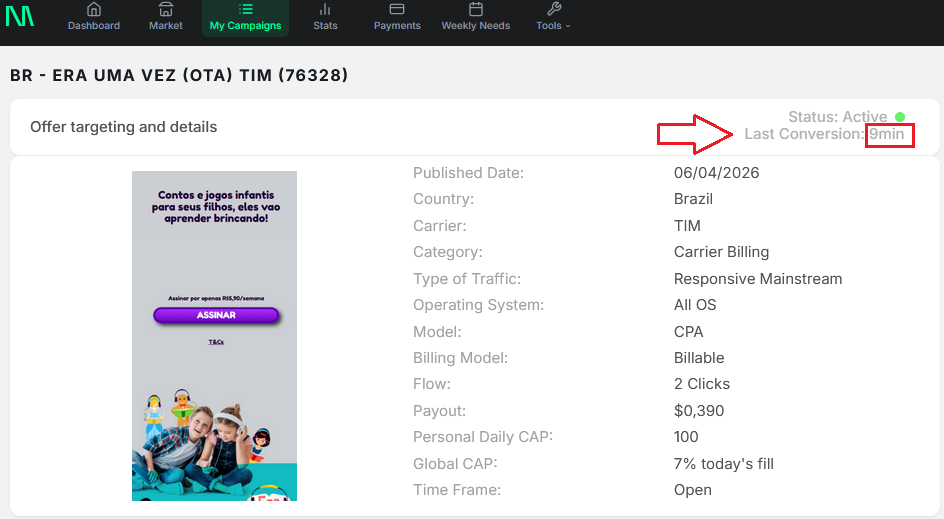
It's intended to give a sense of how frequently the offer converts. It's only a single data point though. Is the fact that offer 76328 converted just 9 minutes ago an indication that it is converting a lot lately, or was it a rare conversion for this offer? There's not enough data to confidently answer this question.
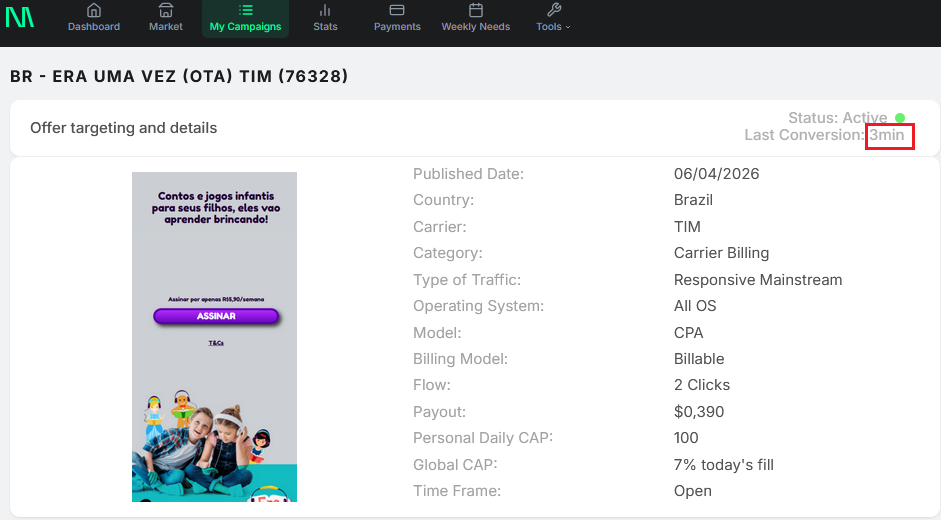
Rather than relying on just 1 value of the "Last Conversion" statistic for offer 76328, it would be more wise to track it across time, i.e. to gather multiple data points. Suppose a few minutes later I refresh the offer page, but now the "Last Conversion" value has dropped from 9min to 3min.
Q:
Introduction
This is a tool for identifying high-converting Mobipium offers. But what is the underlying idea for how it works?
If you're familiar with Mobipium, then you're probably familiar with this "Last Conversion" statistic that appears on offer pages.
It's intended to give a sense of how frequently the offer converts. It's only a single data point though. Is the fact that offer 76328 converted just 9 minutes ago an indication that it is converting a lot lately, or was it a rare conversion for this offer? There's not enough data to confidently answer this question.
Rather than relying on just 1 value of the "Last Conversion" statistic for offer 76328, it would be more wise to track it across time, i.e. to gather multiple data points. Suppose a few minutes later I refresh the offer page, but now the "Last Conversion" value has dropped from 9min to 3min.
Q:
Attachments

Last edited:


